Israeli tanks advanced into central Gaza on Wednesday as the military launched a new operation in an area beyond its established ceasefire positions, forcing Palestinian families to flee and raising concerns about the stability of the October 2025 truce.
Witnesses reported Israeli armoured vehicles moving towards the Salah al-Din road near the Nuseirat and Al-Bureij refugee camps, while shelling, gunfire and airstrikes were reported in surrounding areas.
The Israeli military confirmed that it had begun an operation west of the Yellow Line, the boundary separating areas under Israeli control from other parts of the Gaza Strip under the ceasefire arrangement.
It said the operation was intended to address a threat to its forces and target Hamas infrastructure.
An AFP journalist reported seeing Israeli tanks positioned east of Nuseirat, while Reuters spoke with witnesses who described military vehicles advancing onto the main road.
Palestinian medical officials reported that three people were killed in Israeli strikes across Gaza on Wednesday, including one near the military operation and two in separate incidents in Deir al-Balah and Gaza City. The precise circumstances of each death have not been independently established.
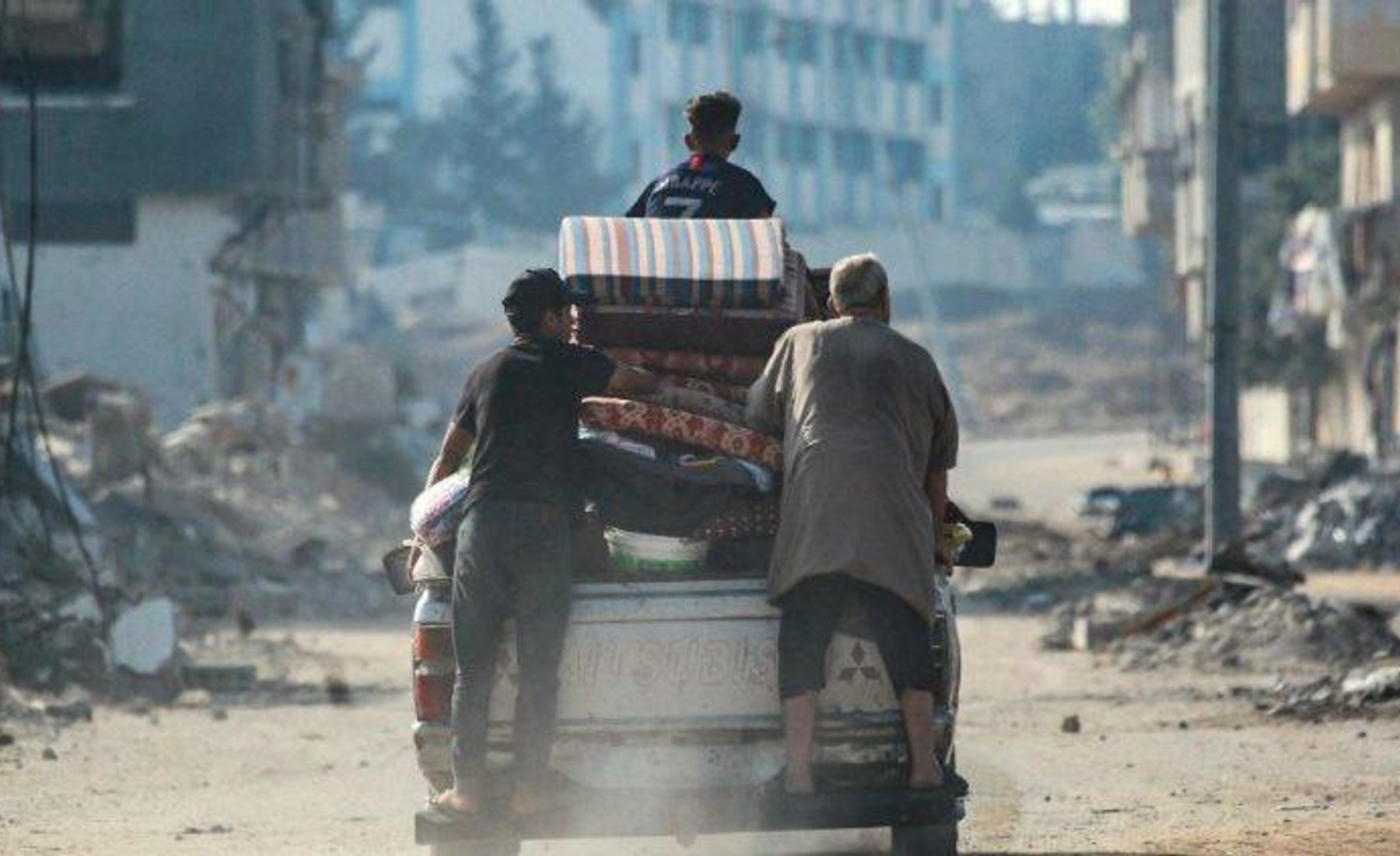
Residents described families leaving shelters and residential areas as military activity intensified. Images from the affected area showed civilians evacuating amid concerns about further attacks.
Israel's defence ministry agency responsible for civilian coordination, COGAT, warned humanitarian organisations against travelling through affected areas and said movement along sections of Salah al-Din road would be restricted.
Hamas condemned the operation, accusing Israel of violating the ceasefire and undermining efforts to maintain the agreement.
The Israeli military rejected that characterisation, saying its forces were responding to threats and alleged Hamas violations.
The ceasefire, introduced in October 2025, brought an end to the main phase of large-scale fighting but has not stopped military strikes, deaths or disputes over the agreement's implementation.
Israel has accused Hamas of rebuilding military capabilities, while Hamas has accused Israel of failing to fulfil its commitments under the arrangement.
The renewed operation comes amid warnings that the ceasefire framework remains vulnerable to collapse.
A US-backed body overseeing implementation has raised concerns about commitments by both sides, including security arrangements, humanitarian access and the future administration of Gaza.
For civilians, the latest military movements have renewed uncertainty in communities already affected by repeated displacement and extensive destruction.
Humanitarian organisations continue to face difficulties delivering assistance to populations living in damaged buildings, temporary shelters and overcrowded displacement sites.
The reported advance is particularly significant because it took place beyond the positions associated with Israeli control under the ceasefire arrangement.
However, the Israeli military has described the operation as limited and directed against specific security threats. The available reporting does not establish that a full-scale ground offensive has resumed.
International attention is now likely to focus on whether Israeli forces withdraw after the operation, whether further clashes occur and whether mediators can prevent the latest confrontation from destabilising the broader ceasefire.