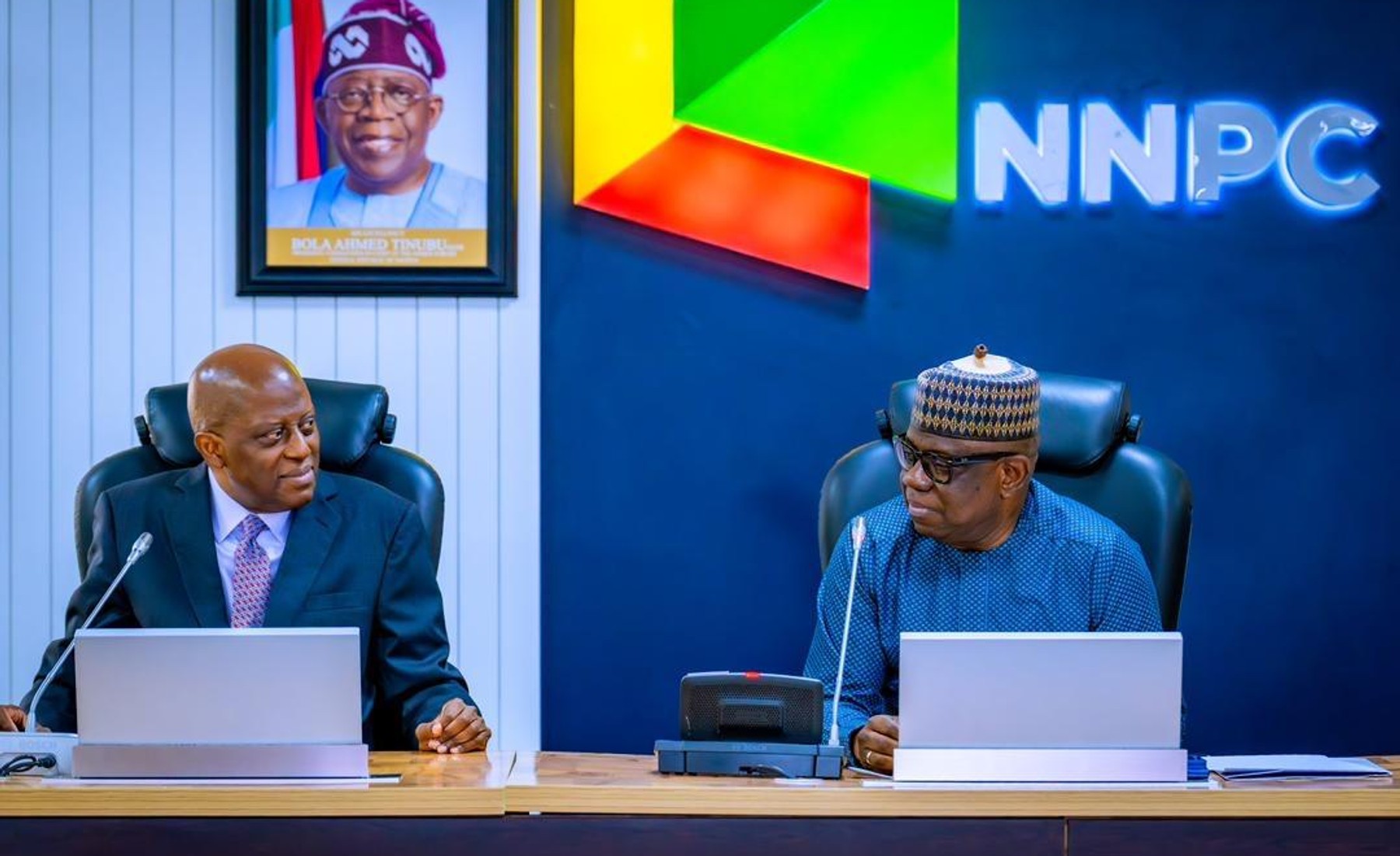
Nigeria's Central Bank and the Nigerian National Petroleum Company Limited have signed a new agreement aimed at improving the management of oil and gas revenues, strengthening foreign-exchange inflows and expanding access to financing for energy projects.
The memorandum of understanding was signed on Wednesday, November 18, at the Central Bank of Nigeria's headquarters in Abuja by CBN Governor Olayemi Cardoso and NNPC Group Chief Executive Officer Bayo Ojulari.
The agreement establishes a more structured framework for cooperation between the two institutions, covering petroleum revenue management, international financial transactions, energy investment and regulatory compliance.
Cardoso said the arrangement would strengthen coordination between Nigeria's monetary authority and its national energy company, whose activities remain central to government revenue and foreign-currency earnings.
The central bank currently manages key operational foreign-currency accounts belonging to NNPC, making it an important institution in the settlement and remittance of oil and gas proceeds.
Under the new framework, the institutions intend to improve payment systems, strengthen transparency and coordinate financial processes associated with petroleum exports and energy development.
The agreement also covers efforts to attract international financing for projects involving Nigeria's substantial natural gas resources.
Ojulari said closer cooperation would support financial discipline and help NNPC mobilise investment using its assets and balance sheet.
The partnership comes as Nigeria continues efforts to improve foreign-exchange liquidity, attract investment and strengthen confidence in its financial and energy sectors.
Oil and gas exports remain an important source of foreign currency for the country, making the efficiency and transparency of revenue collection significant to broader economic management.
The agreement is also expected to establish joint committees responsible for implementation, coordination and monitoring.
NNPC officials have linked improved financial arrangements to the company's ambition to increase crude oil production and expand development of natural gas resources.
However, the signing does not itself guarantee increased production, stronger foreign-exchange reserves or immediate improvements in the value of the naira.
Those outcomes will depend on implementation, actual export receipts, financing commitments and wider economic conditions.
The memorandum represents a formal commitment to closer institutional cooperation rather than a newly announced funding disbursement.
For businesses and investors, its significance will ultimately depend on whether the framework produces more predictable financial processes, greater transparency and improved access to capital across Nigeria's energy industry.