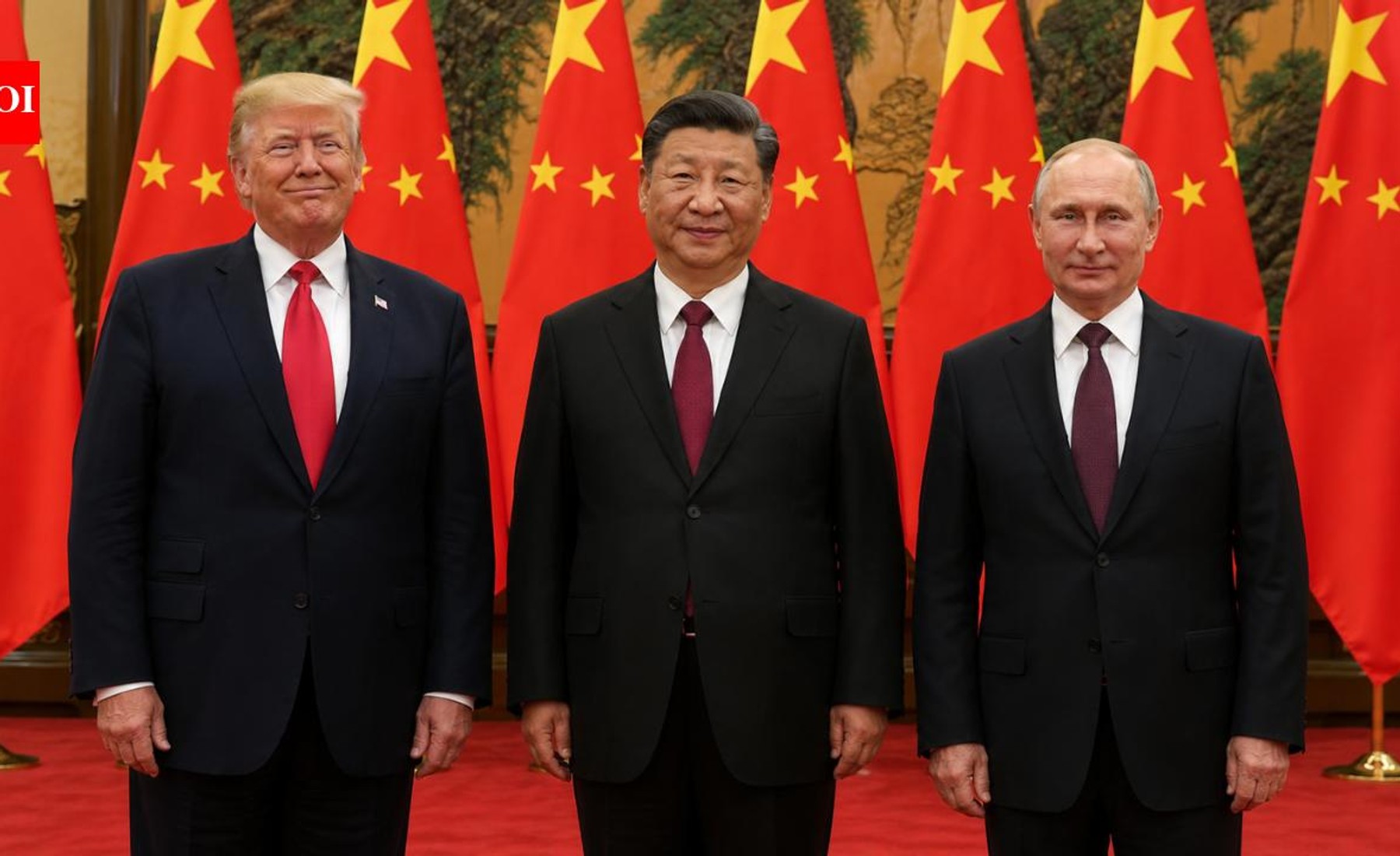
US President Donald Trump is expected to hold a joint meeting with Chinese President Xi Jinping and Russian President Vladimir Putin in Shenzhen next Thursday, November 19, in a diplomatic encounter that could open discussions on a new international nuclear arms control framework.
The White House confirmed the plans ahead of Trump's visit to Asia, saying the three leaders would meet on the sidelines of the Asia-Pacific Economic Cooperation summit.
The proposed talks would bring together the leaders of the world's three largest nuclear powers at a time of heightened tensions involving Ukraine, the Middle East and strategic competition between Washington and Beijing.
According to US officials, Trump intends to raise the possibility of reducing nuclear arsenals and establishing a new arms control arrangement that would include China.
The United States and Russia possess the world's largest nuclear weapons stockpiles, while China's arsenal is considerably smaller but expanding.
The expiration of the New START treaty earlier this year has added urgency to discussions about the future of nuclear restrictions. The agreement had placed limits on deployed strategic nuclear weapons held by Washington and Moscow.
China has previously resisted joining negotiations on comparable terms, arguing that its arsenal remains substantially smaller than those of the two other powers.
American officials have cautioned that the Shenzhen meeting is unlikely to produce an immediate agreement. Instead, the administration sees it as an opportunity to begin discussions that could eventually lead to more formal negotiations.
The gathering also comes amid continuing disagreement over Russia's war in Ukraine.
Ukrainian officials have expressed concern about the prospect of major powers discussing the conflict without Kyiv's direct participation, although Washington has indicated that Ukraine is not expected to be a principal subject of the planned talks.
The White House has also said that no separate bilateral meeting between Trump and Putin is scheduled.
Beyond security, the encounter carries diplomatic significance for China, which will host the leaders during a major regional economic gathering.
For Beijing, the meeting presents an opportunity to demonstrate its influence in international diplomacy. For Washington and Moscow, it offers a rare occasion for direct engagement on strategic security questions.
Whether the meeting leads to substantive negotiations will depend on the willingness of all three governments to reconcile competing security priorities.
For now, the announcement signals a potential opening for renewed nuclear diplomacy, rather than a confirmed breakthrough.