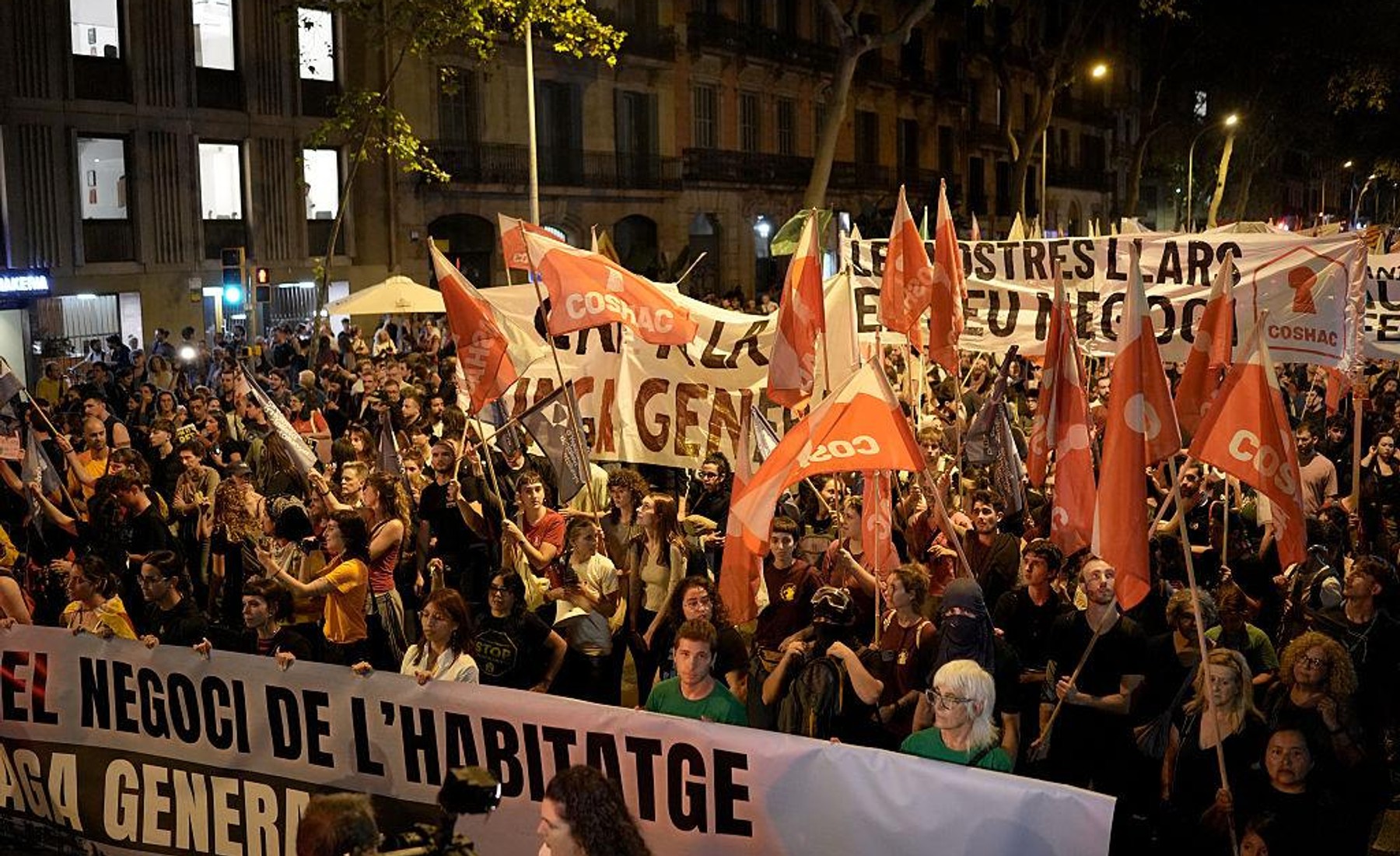
Spain has been hit by its first general strike in 14 years, with workers across the country walking off their jobs on Wednesday in protest against rising housing costs, evictions and a shortage of affordable homes.
The nationwide action, organised with the backing of the country's two largest trade unions, UGT and CCOO, comes less than three weeks before a general election scheduled for 29 November.
Workers joined picket lines across several cities, while industrial operations, transport and other services faced disruption as protesters demanded stronger government intervention in the housing market.
The strike reflects growing frustration over the cost of accommodation in Spain, where rents have risen sharply and home ownership has become increasingly difficult for younger people and low-income households.
According to figures cited by Reuters from the Bank of Spain, the country faces a housing shortage of approximately 750,000 homes, with that deficit projected to exceed one million by 2028.
The average monthly rent of €1,176 is equivalent to almost 99% of the average monthly salary of a young person, according to figures from Spain's Youth Council.
The financial pressure has made housing one of the country's most contentious political issues.
Early participation was strongest in industrial sectors, according to the unions, which reported turnout reaching 90% in ports and automotive manufacturing.
They also reported major stoppages at Volkswagen's plant in Navarre and SEAT's operations in Barcelona.
Participation figures supplied by the unions have not been independently verified across every sector.
Healthcare, social services and postal operations recorded lower levels of participation, according to the same union estimates.
In Madrid, tensions developed around the Mercamadrid wholesale market, where approximately 1,000 demonstrators gathered.
The Madrid branch of CCOO alleged that police used pepper spray against protesters and said 13 people required medical attention.
Police confirmed one arrest but did not confirm the union's account of pepper spray being used at that location. A police spokesperson separately acknowledged its use to disperse another picket line in the Carabanchel district.
The industrial action follows weeks of demonstrations and public anger over evictions, including the case of an 87-year-old woman in Madrid whose eviction and subsequent death became a rallying point for housing campaigners.
Tenant organisations have demanded stronger protections against displacement, measures to curb speculative property investment and changes to policies they say favour landlords over residents.
The protests have also intensified pressure on Prime Minister Pedro Sánchez, whose government faces a difficult election campaign.
Sánchez called the 29 November election following mounting political disputes, including the rejection of government measures intended to limit evictions and ease pressure on tenants.
His administration has blamed opposition-controlled regional and municipal governments for contributing to insufficient housing supply.
Opposition parties, however, have criticised the government's handling of the crisis, while some union leaders and housing campaigners have made clear that they also hold the central government responsible.
The general strike comes amid broader political uncertainty and concern over public services.
On Tuesday, Spanish train drivers separately staged industrial action demanding greater investment in railway maintenance and safety following deadly rail accidents earlier in the year.
Wednesday's walkout has added to disruption in a country already facing tensions over living costs and infrastructure.
Severe weather has also complicated the planned demonstrations, with Spain's weather agency issuing warnings across multiple regions over strong winds, heavy rain and rough seas.
Despite those conditions, organisers proceeded with the strike, describing affordable housing as a central issue affecting workers' financial security.
The timing places housing policy at the centre of Spain's election campaign, with the governing Socialist Party and opposition groups offering competing approaches to rents, supply and tenant protections.
For unions and campaigners, the dispute goes beyond wages, reflecting concern that rising accommodation costs are absorbing much of the income workers earn.
The scale of the strike's eventual impact will depend on participation throughout Wednesday, the extent of service disruption and the response from political leaders.
The immediate development is nevertheless significant: Spain's major labour organisations have united behind a nationwide stoppage over housing for the first time in 14 years, placing the country's affordability crisis firmly in the national political spotlight.