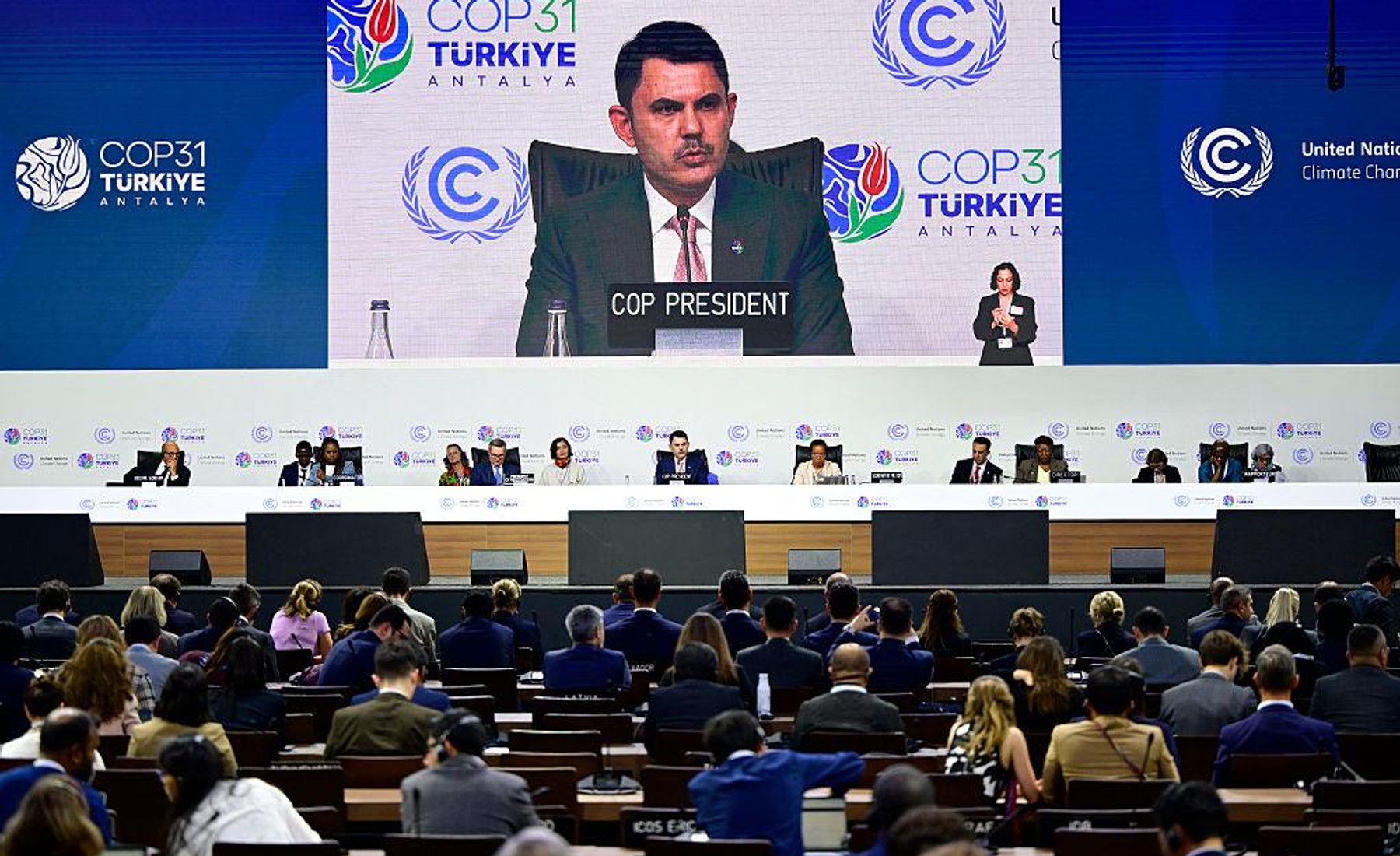
International climate negotiations at COP31 in Antalya, Türkiye, have ended without a consensus agreement after the European Union and other countries rejected a final proposal that failed to address fossil fuels explicitly.
The breakdown was confirmed on Sunday, 22 November, when COP31 President Murat Kurum acknowledged during the closing plenary that objections from participating countries meant the proposed decisions could not be adopted.
The outcome marks a significant setback for international climate diplomacy after more than two weeks of negotiations. The conference had been scheduled to conclude on Friday, 20 November, but continued through the weekend as delegates struggled to resolve disagreements over emissions reductions, climate finance and carbon-removal technologies.
The European Union opposed the proposed agreement because it contained no explicit reference to fossil fuels or the transition away from them. Ireland's environment minister, Darragh O'Brien, speaking for the EU, argued that such omissions were unacceptable in an international climate agreement.
Panama also rejected the text, maintaining that it did not adequately respond to the scale of the climate crisis.
The disagreement exposed longstanding divisions between countries seeking stronger commitments to reduce dependence on fossil fuels and major oil-producing economies concerned about restrictions on their energy industries.
The proposed agreement acknowledged the likelihood of global temperatures exceeding the Paris Agreement's 1.5°C warming threshold. However, it placed emphasis on developing technologies capable of removing carbon dioxide from the atmosphere.
That approach drew criticism from negotiators and observers who feared it could weaken pressure to reduce emissions directly. Saudi Arabia and other oil-producing countries had advocated keeping carbon-removal technologies within the proposed framework.
For African countries and other climate-vulnerable economies, the failure to secure an agreement adds uncertainty to international efforts to strengthen climate finance, adaptation and emissions-reduction commitments.
Many developing nations face growing exposure to extreme weather, food insecurity and infrastructure damage while contributing comparatively little to historical global emissions.
The breakdown is particularly notable because the last comparable failure to adopt an agreement by consensus at a UN climate summit occurred in Copenhagen in 2009.
Nevertheless, the failure at COP31 does not cancel existing commitments under the Paris Agreement or dismantle the international climate framework established through previous negotiations.
The Antalya outcome leaves governments facing renewed questions about how to bridge divisions over fossil fuels, climate finance and the pace of the global energy transition before the next round of negotiations.