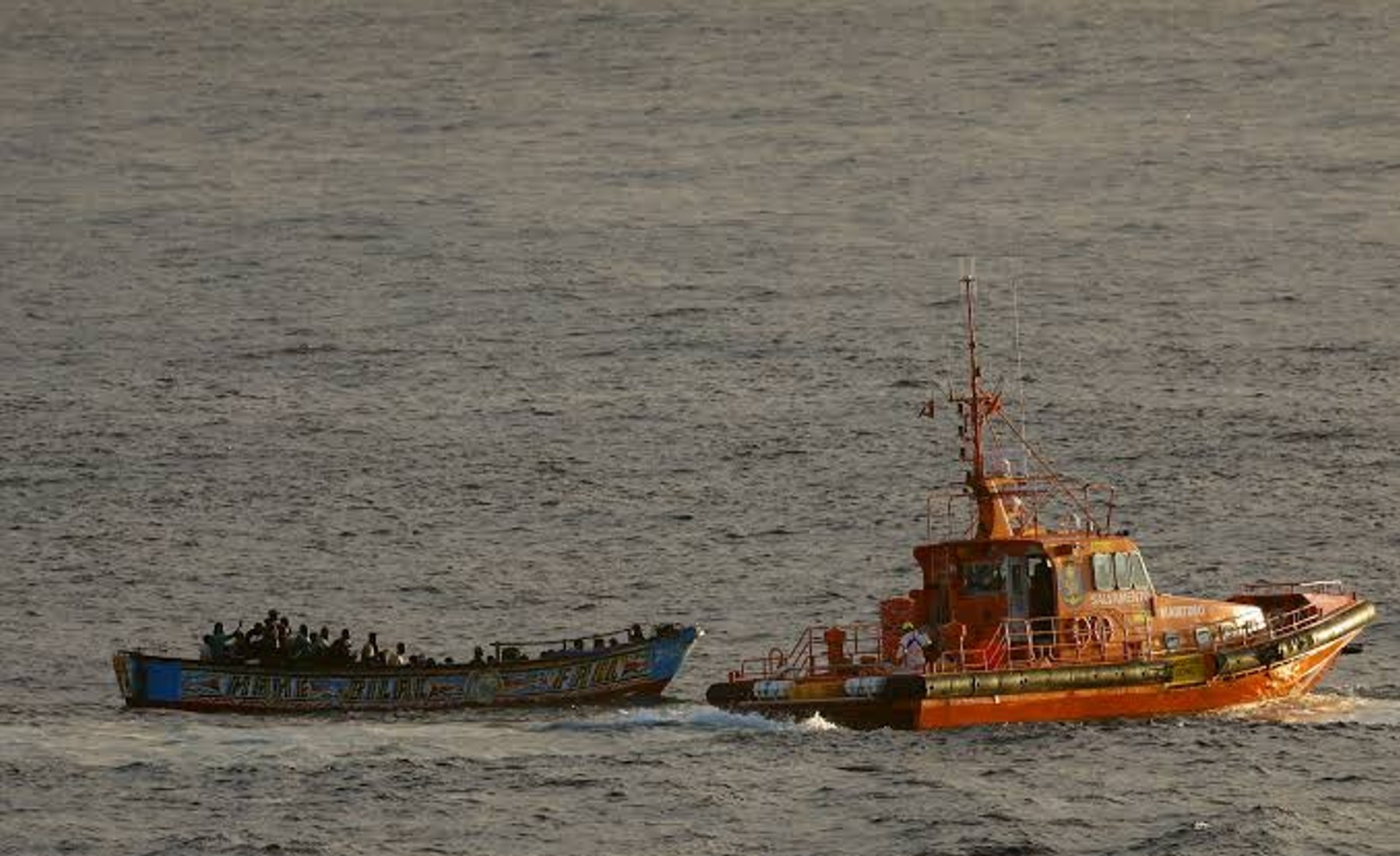
Spanish rescue services assisted 1,488 migrants travelling aboard 14 boats near the Canary Islands on Saturday, November 14, marking the highest number of people rescued along the Atlantic migration route in a single day.
The figure surpassed the previous daily record of 1,461, established on November 7, 2020, according to figures reported by Spain's EFE news agency and Reuters.
Most of the arrivals were recorded on El Hierro, the small Atlantic island that has become a major destination for boats travelling from the West African coast.
A total of 1,235 people reached El Hierro aboard 12 vessels, while two additional boats arrived near Gran Canaria and Tenerife.
Among those rescued were women and children, including a group of 240 people who reportedly spent six days at sea after departing from The Gambia.
The arrivals reflect renewed activity along the Atlantic migration route, which connects parts of West Africa with Spanish territory and is considered one of the world's most dangerous migration crossings.
Many of those reaching the islands have travelled from Senegal, The Gambia, Guinea and other West African countries, often aboard overcrowded wooden fishing boats.
The latest rescue operations have intensified pressure on local authorities, emergency workers and humanitarian organisations responsible for providing medical assistance, temporary accommodation and onward transfers.
El Hierro, which has a population of approximately 11,400, has been particularly affected by the increase in arrivals.
Spain's government had already announced additional emergency funding and reception measures earlier in November, following several days of unusually high migrant arrivals.
The measures include additional resources for reception facilities, medical services and the transfer of migrants to other islands and mainland Spain.
Spanish Territorial Policy Minister Ángel Víctor Torres was expected to visit El Hierro on Sunday to assess the situation and meet local officials.
Despite the recent increase, Reuters reported that migrant arrivals to the Canary Islands between January and October 31 remained 5.5% below the equivalent period in 2025.
The latest figures nevertheless underline the rapid change in migration patterns during the autumn months, when weather conditions can make some Atlantic crossings more accessible.
Humanitarian organisations continue to warn about the dangers of the route, including rough seas, overcrowded vessels and journeys that can last several days without adequate food, water or medical care.
Authorities have not established a final account of the health conditions of everyone rescued during Saturday's operations.
The record day is expected to renew discussions in Spain about emergency reception capacity, European migration policy and cooperation with West African countries.