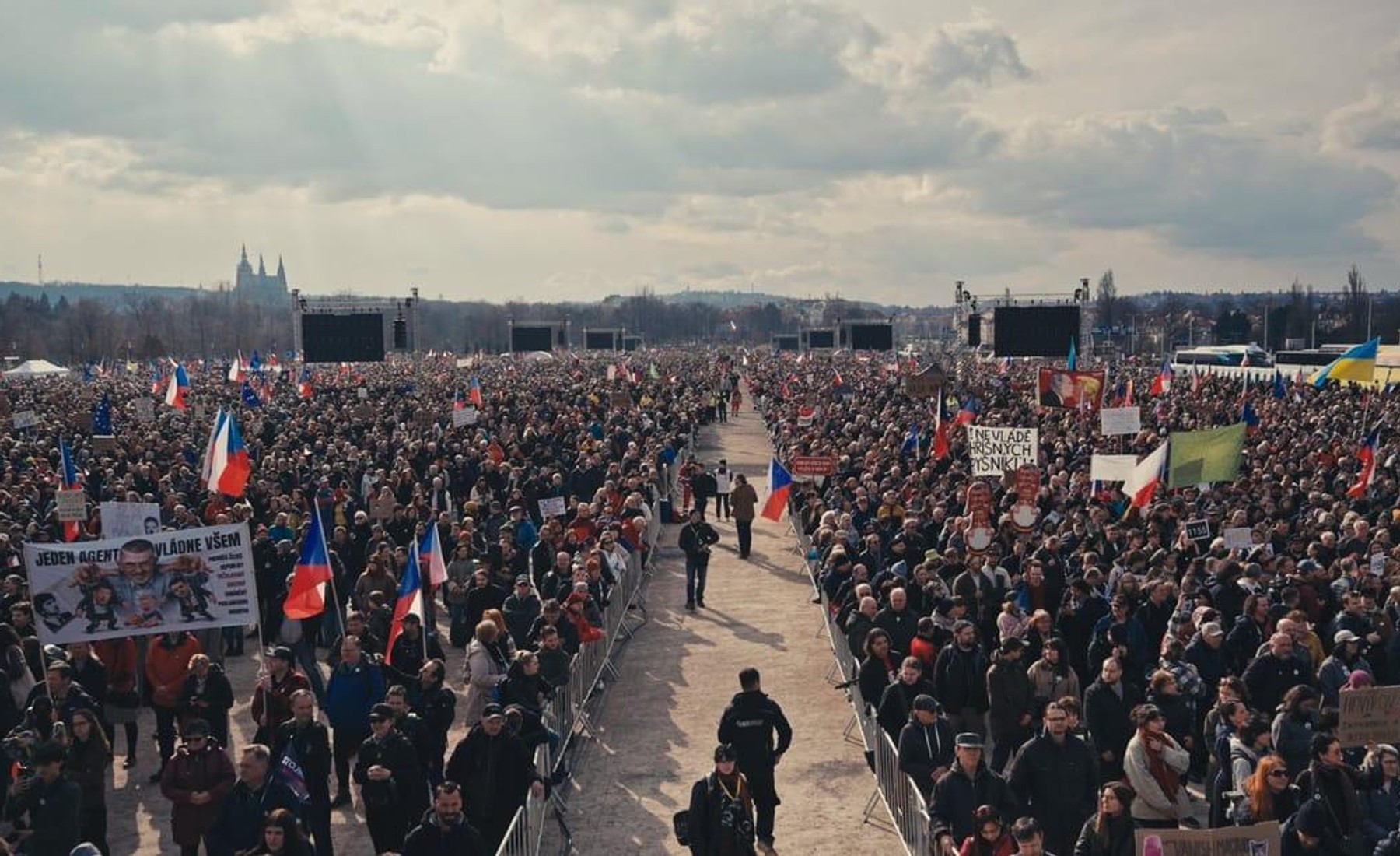
Hundreds of thousands of people rallied in the Czech capital, Prague, on Sunday, November 15, in a major demonstration against government proposals to change how the country's public television and radio broadcasters are financed.
The protest, held at Letná Park, drew an estimated 350,000 participants, according to organisers from the civic movement Million Moments for Democracy. Some Czech media reported higher estimates, although the exact turnout has not been independently established.
Demonstrators called on Prime Minister Andrej Babiš's government to withdraw legislation that would replace the existing licence-fee system for Czech Television and Czech Radio with funding allocated through the national budget.
Critics argue that the proposed arrangement could leave public broadcasters more vulnerable to political pressure and reduce their ability to operate independently.
The legislation would also reduce the broadcasters' funding by approximately 15%, according to reports on the proposal. Media representatives have warned that the reduction could lead to job losses, fewer productions and cuts to programming.
The government has defended the plan as a measure intended to ease household costs. Babiš has rejected suggestions that the changes are designed to undermine editorial independence.
Sunday's gathering followed weeks of opposition to the proposal, including demonstrations and a strike by public broadcasting employees earlier in November.
The dispute intensified after government lawmakers advanced the legislation through its first parliamentary reading in a late-night session in October. Opposition politicians and civic groups criticised the procedure, arguing that insufficient time had been allowed for parliamentary debate.
The Letná demonstration brought together journalists, students, artists, academics and representatives of civil society.
The location carries historical significance. Large demonstrations at Letná helped define the Velvet Revolution of 1989, which ended communist rule in what was then Czechoslovakia.
Organisers said the latest gathering reflected wider concerns about democratic institutions and the direction of the government.
The proposed funding overhaul has also attracted attention beyond the Czech Republic, with European media organisations warning about the potential consequences of placing public broadcasters under greater financial dependence on government decisions.
European Union officials have emphasised the importance of transparent, adequate and predictable funding arrangements for public-service media.
The legislation has not completed the parliamentary process, and its final provisions remain subject to further consideration.
Sunday's demonstration adds substantial public pressure on the government, although Babiš has indicated that his administration intends to proceed with the reform.