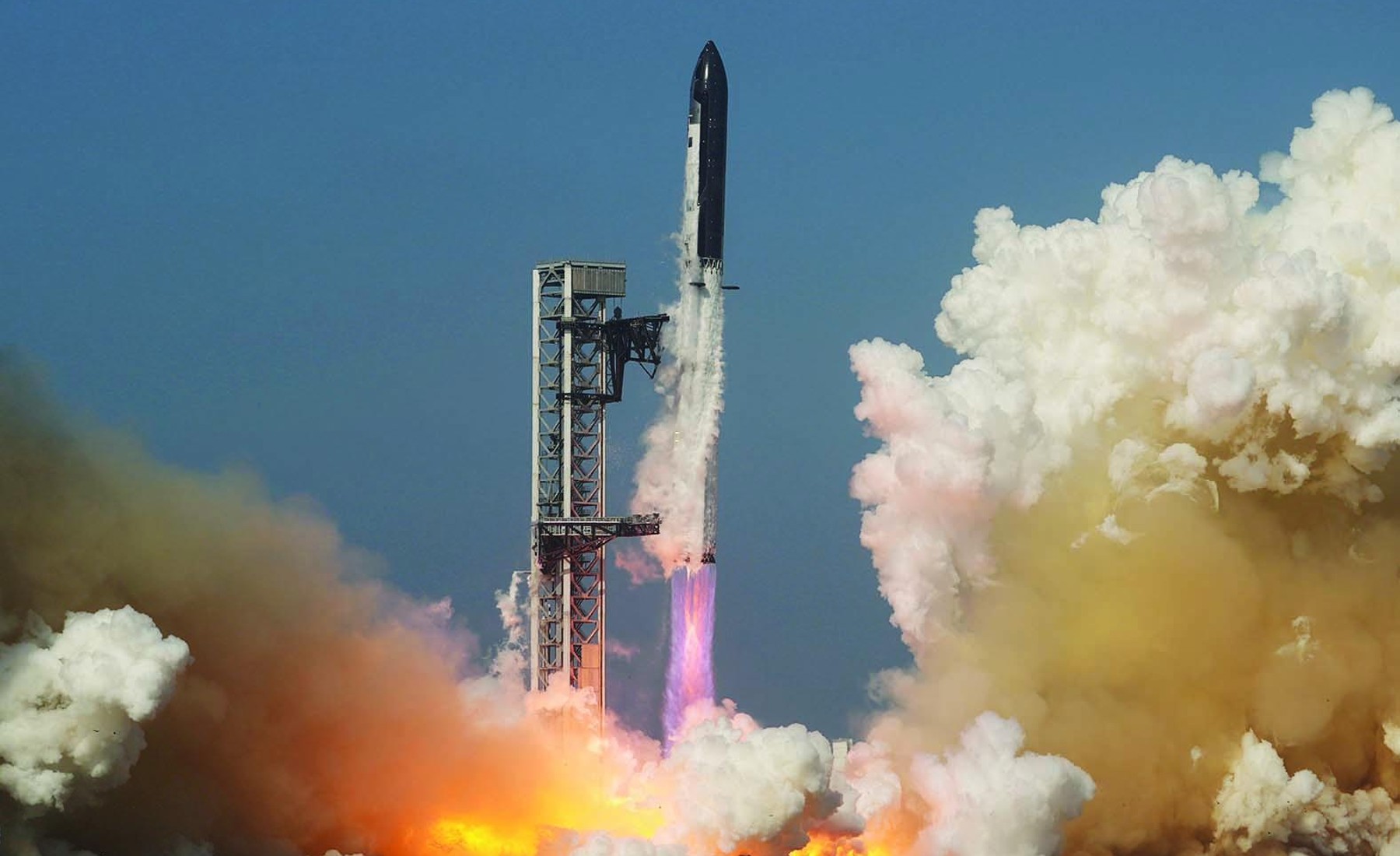
SpaceX's latest Starship rocket reached orbit on Friday, November 13, but an attempt to recover its Super Heavy booster ended in an explosion over the Gulf of Mexico, preventing the company from completing a planned double recovery of the launch vehicle.
The rocket lifted off from SpaceX's Starbase facility in Texas shortly before 11:50 p.m. Nigerian time. The mission marked Starship's 15th integrated flight test and one of the company's most ambitious attempts to demonstrate a fully reusable launch system.
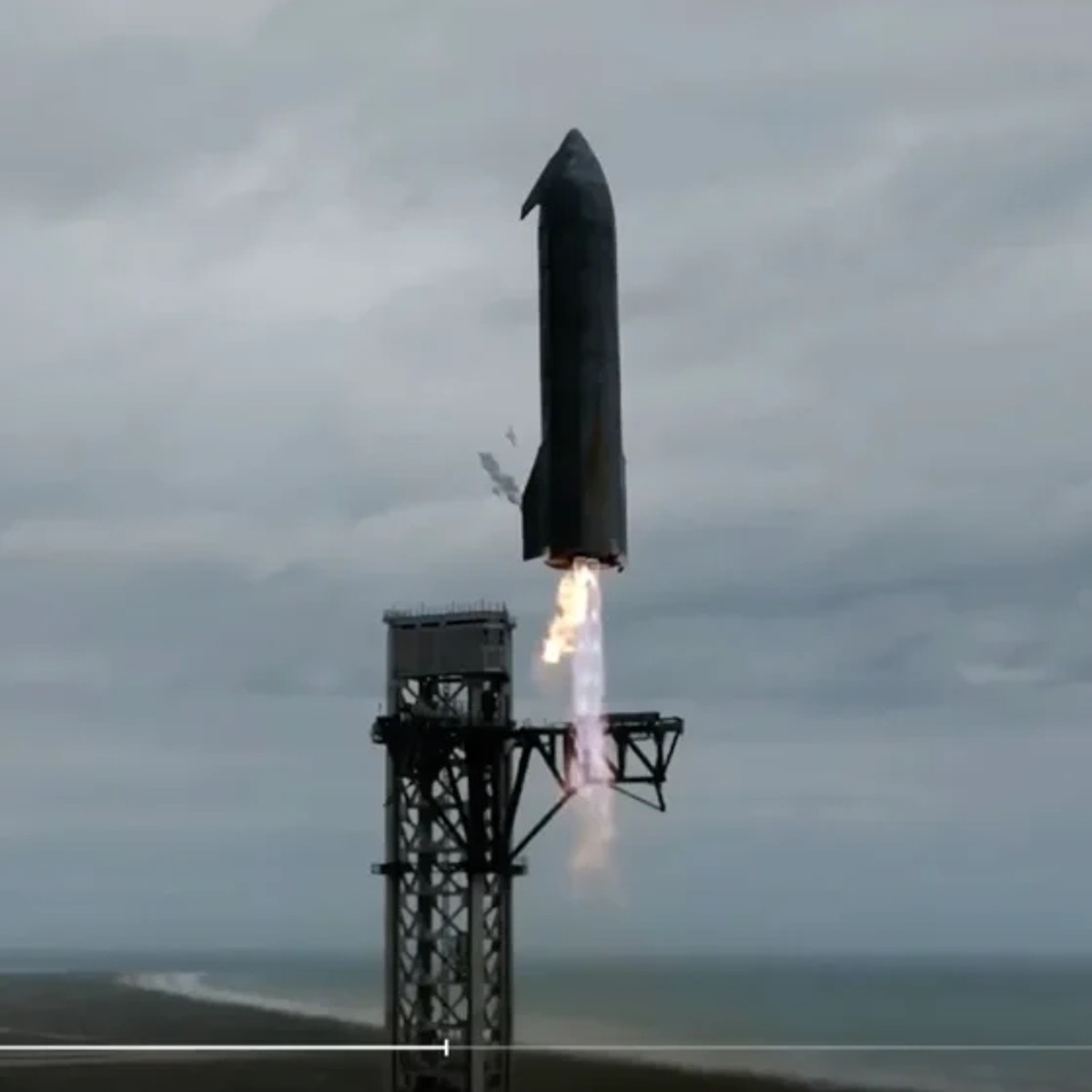
Following separation, the Super Heavy booster began returning towards the launch site, where SpaceX had planned to capture it using mechanical arms attached to the launch tower.
Mission controllers subsequently diverted the booster offshore. It exploded after the attempted recovery was abandoned.
SpaceX had not publicly established the cause of the diversion at the time of reporting.
The upper-stage Starship spacecraft continued into orbit, where it deployed 26 Starlink V3 satellites. Its flight plan called for approximately 22 hours in space before an attempted return to Texas.
A successful upper-stage recovery would represent a major milestone for the programme. SpaceX has previously recovered Super Heavy boosters using its launch tower, but has not yet completed a tower catch of an orbital Starship spacecraft.
The company is developing Starship to carry larger satellite payloads and support future missions beyond Earth orbit.
NASA is also relying on a version of the spacecraft for its Artemis lunar programme, making progress towards reliable recovery and reuse important beyond SpaceX's commercial operations.
Friday's mission therefore produced mixed results. Starship reached orbit and deployed its satellites, while the booster recovery objective was unsuccessful.
Attention now turns to the spacecraft's planned return on Saturday, which could provide another significant test of the vehicle's reusability.
The outcome of that return attempt remained unconfirmed at the time of publication.