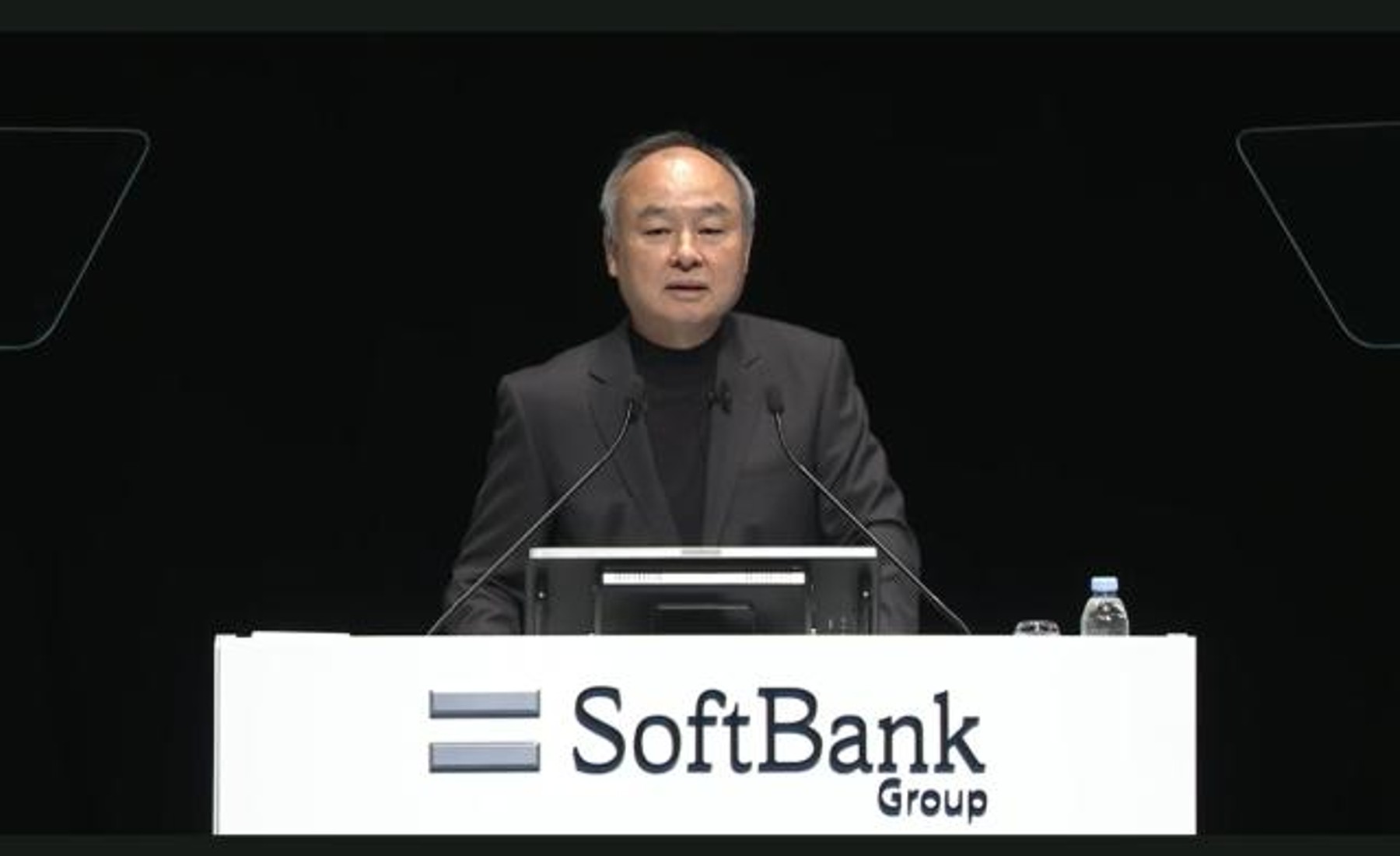
SoftBank Group has reported a quarterly loss of approximately $7 billion, underscoring the financial pressure facing one of the world's biggest investors in artificial intelligence as spending on data centres and technology infrastructure continues to accelerate.
The Japanese investment group recorded a net loss of 1.1 trillion yen for the three months ending September 2026, compared with a profit of approximately 2.5 trillion yen during the same period last year.
The results, announced on Tuesday, 10 November, represent a sharp reversal for the Tokyo-based company led by billionaire Masayoshi Son.
A significant portion of the loss came from US data-centre investments. SoftBank recorded a charge of approximately $3.7 billion relating to advance purchases of equipment for projects whose requirements subsequently changed.
The company could recover part of those costs through future purchase rebates, although the potential recovery would not eliminate the immediate financial impact.
Financing expenses also increased sharply as SoftBank continued borrowing to support its investments across artificial intelligence, infrastructure and robotics.
The latest results come at a sensitive time for the global AI industry, where companies are committing enormous sums to computing capacity, energy infrastructure and advanced technology while investors seek clearer evidence of future returns.
SoftBank has emerged as one of the most aggressive financial backers of the sector.
Its investments include a reported $64.6 billion commitment to OpenAI, giving the Japanese group an approximately 13% stake in the company behind ChatGPT.
The investment forms part of Son's broader ambition to position SoftBank at the centre of the next generation of artificial intelligence technology.
However, the strategy has also increased the company's exposure to changes in market sentiment, financing conditions and the commercial performance of AI businesses.
SoftBank raised approximately $56.5 billion during the quarter to finance its expansion, according to Reuters, while its financing costs more than doubled from a year earlier.
The company has also used its holdings in chip designer Arm as collateral for borrowing, linking part of its financing capacity to the market value of a major technology investment.
The scale of its exposure has attracted closer attention as technology stocks have weakened and concerns have grown about whether AI infrastructure investment can generate sufficient revenue to justify its cost.
SoftBank's shares have fallen substantially from their June levels, although the stock rose sharply in Tokyo trading before the latest earnings announcement.
Despite the loss, the company remains committed to its artificial intelligence strategy.
The financial results do not establish that demand for AI technology is collapsing. Instead, they illustrate the risks associated with funding expensive infrastructure projects before their final requirements and returns are fully established.
For investors, the central question is whether SoftBank's long-term AI investments will eventually deliver gains large enough to offset the mounting costs of financing and construction.
The outcome will matter beyond Japan, given the company's extensive financial relationships with OpenAI, Arm and the wider global technology industry.