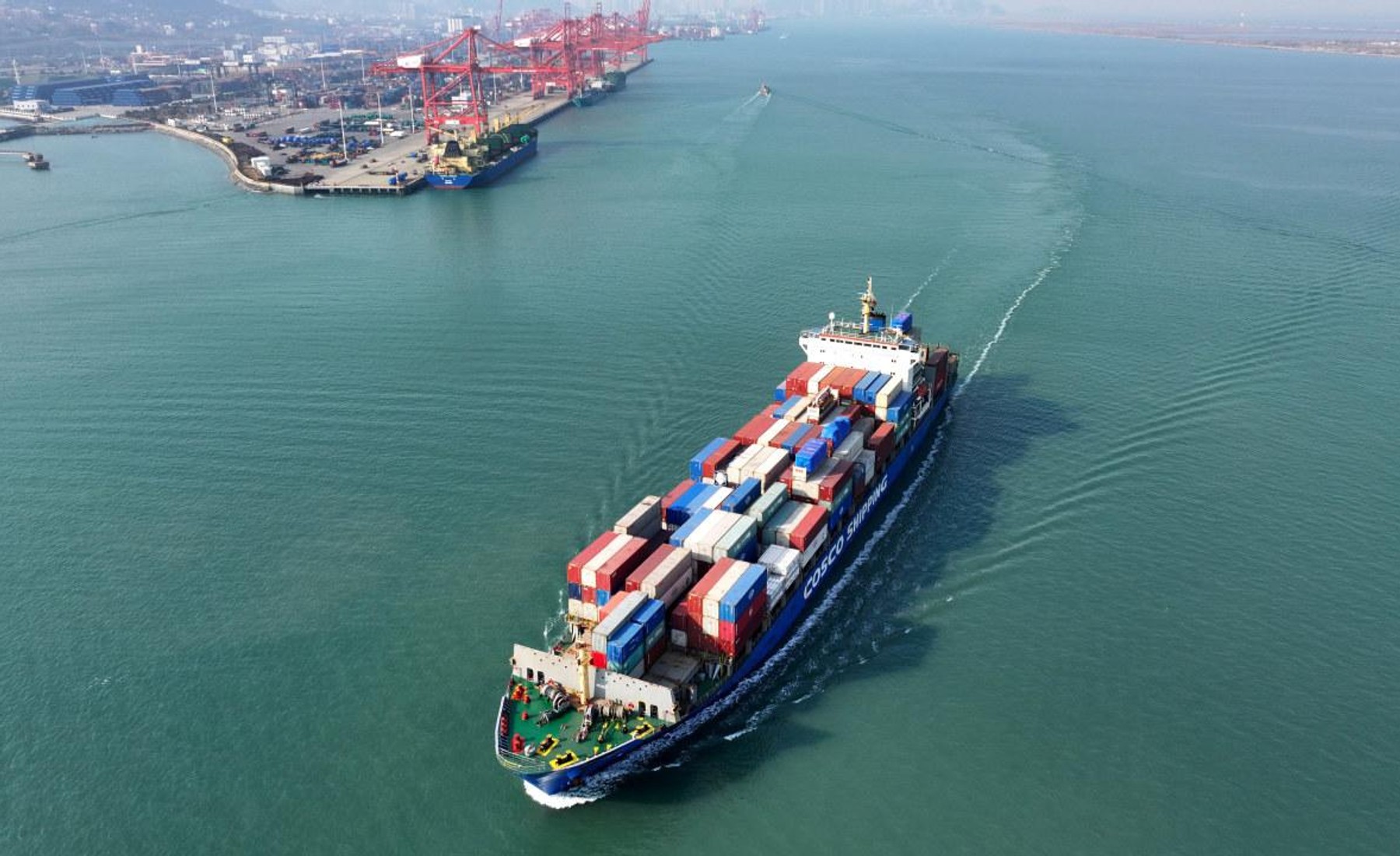
China's trade surplus has exceeded $1 trillion in the first ten months of 2026, reaching the milestone a month earlier than last year as strong global demand for technology products continues to support the world's second-largest economy.
Figures released by China's General Administration of Customs on Tuesday, 10 November, showed that the country recorded a trade surplus of $1.04 trillion between January and October.
The milestone marks the second consecutive year China has surpassed $1 trillion in its trade surplus. In 2025, the country recorded a full-year surplus of approximately $1.2 trillion.
Exports rose 35.2% in October compared with the same month last year, while imports increased 41.6%, reflecting stronger purchases of foreign goods and commodities.
Despite the rapid increase in exports, China's monthly trade surplus narrowed to $105.3 billion in October from $133.5 billion in September as imports grew more quickly.
The latest figures highlight the importance of international demand to China's economy, particularly as domestic consumption remains subdued and the country's property sector continues to face difficulties.
Technology products have been among the strongest contributors to export growth.
The global expansion of artificial intelligence infrastructure has increased demand for semiconductors, servers, networking equipment and other advanced components.
According to the customs figures reported by Reuters, China's semiconductor exports rose 111.1% in value during the first ten months of the year, while exports of high-technology products increased 47.9%.
Vehicle exports have also remained an important source of growth, with Chinese manufacturers continuing to expand their presence in international markets.
However, the strength of China's export sector has raised concerns among trading partners about competition, industrial capacity and the growing imbalance in global trade.
The European Union has been examining additional measures affecting Chinese imports, while trade relations between Beijing and Washington remain sensitive despite efforts to ease tensions.
China's trade surplus with the United States stood at approximately $266.5 billion during the first ten months of the year, according to figures reported by Associated Press.
Its surplus with the European Union exceeded $310 billion over the same period.
The data comes ahead of the Asia-Pacific Economic Cooperation summit in Shenzhen, where Chinese President Xi Jinping and US President Donald Trump are expected to meet.
Trade policy, tariffs and access to strategic technologies are likely to remain important issues in discussions between the two countries.
Economists have also warned that China's increasing reliance on overseas demand could expose the economy to further trade restrictions or a slowdown in global technology investment.
While the artificial intelligence boom has supported semiconductor exports, any reduction in spending on AI infrastructure could affect future demand.
For now, the latest figures underline China's continued strength as a major global manufacturing and export centre, even as the country faces pressure to strengthen domestic consumption and reduce its dependence on foreign markets.
The figures also reinforce the importance of trade relations between China and other major economies, with decisions taken in Beijing, Washington and Brussels carrying implications for manufacturers, investors and consumers worldwide.