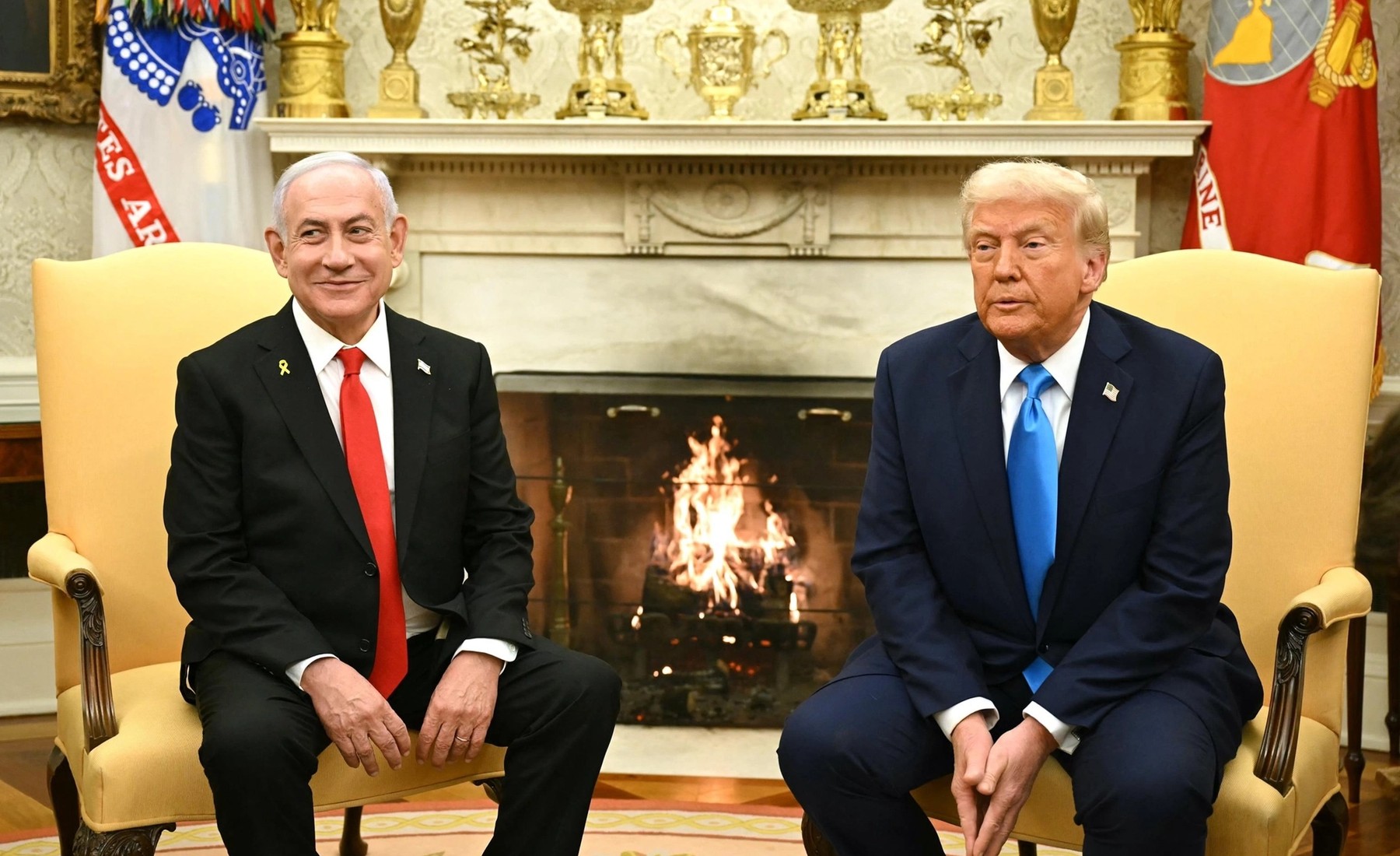
US President Donald Trump has announced that the United States will stop providing approximately $4 billion in annual assistance to Israel after the end of 2026, saying he reached an agreement with Israeli Prime Minister Benjamin Netanyahu to discontinue the payments.
The announcement, made during an interview with Fox News on Tuesday, November 3, represents a potentially significant change in one of Washington's longest-standing military assistance relationships.
Trump said the arrangement had been agreed months earlier and that Israel no longer required the annual financial support.
However, the precise funding covered by his statement remains unclear, and neither the White House nor Netanyahu's office had provided a detailed explanation of how the proposed change would be implemented when Reuters published its report.
The president's remarks have been independently reported by Reuters and the Associated Press.
What Trump announced
Speaking on Fox News' Fox & Friends programme, Trump said he and Netanyahu had agreed that the United States would stop making annual payments to Israel at the end of the year.
He placed the amount at approximately $4 billion annually.
Trump argued that Israel was capable of financing its own military requirements and suggested that American assistance had become increasingly controversial in domestic politics.
The president also indicated that Washington would remain willing to assist Israel if necessary.
His comments did not amount to an announcement that the United States would end its wider strategic relationship with Israel.
Trump separately indicated that Israel would remain able to purchase American military equipment.
That distinction is important because ending grant assistance would not necessarily terminate arms sales, intelligence cooperation, joint defence programmes or other security arrangements.
Existing military aid agreement runs through 2028
The United States and Israel currently operate under a 10-year memorandum of understanding negotiated during the administration of President Barack Obama in 2016.
The agreement covers the 2019–2028 financial years and provides for $38 billion in US military assistance over that period.
That amounts to approximately $3.8 billion annually, including military financing and missile-defence support.
Much of the assistance is used to purchase equipment and services from American defence manufacturers.
Trump's statement that payments would end after 2026 therefore raises questions about how the administration intends to handle the remaining period of the existing agreement.
The agreement establishes a framework for assistance, while the US Congress retains a central role in authorising and appropriating federal expenditure.
The administration has not publicly established, through the reporting reviewed, whether it intends to seek legislative changes, alter future appropriations or negotiate a different funding arrangement.
Consequently, the president's announcement should not be interpreted as proof that all relevant assistance has already been legally terminated.
Netanyahu has previously supported reducing dependence on aid
The announcement follows earlier statements by Netanyahu indicating that Israel should gradually reduce its reliance on American military assistance.
The Israeli prime minister has argued that Israel should increasingly operate as an economic and security partner capable of purchasing its own defence equipment.
In a May 2026 interview with CBS, Netanyahu discussed reducing dependence on US military aid over a period of years.
He subsequently expressed similar views in correspondence with an American lawmaker.
However, those earlier statements did not establish that the existing aid agreement would end in December 2026.
The latest announcement appears to accelerate the timetable described in Netanyahu's previous public comments.
His office had not immediately confirmed the details of Trump's newly announced arrangement.
Political pressure over US support for Israel
Trump's decision comes amid significant changes in American public opinion concerning Israel.
US military assistance has faced growing scrutiny since the outbreak of the Gaza war in October 2023.
Criticism has come from Democratic politicians, progressive organisations and an increasing number of voters concerned about the humanitarian consequences of the conflict.
Opposition to continued assistance has also emerged among some conservative and Republican constituencies, although support for Israel remains substantial within the American political establishment.
According to polling cited by Reuters, a June survey by Quinnipiac University found that 48% of American voters believed the United States was too supportive of Israel.
Among Democratic voters, that figure reached 66%.
The findings indicate a significant change from comparable polling conducted in 2017.
Trump acknowledged the domestic political debate during his interview, arguing that the annual payments had become a target for criticism.
His announcement coincides with the November 3 US congressional midterm elections, although the administration has not established the elections as the formal basis for the proposed funding change.
What happens to American weapons sales?
The proposed withdrawal of annual assistance does not necessarily mean that Israel will stop purchasing weapons from the United States.
American defence manufacturers supply aircraft, missiles, ammunition, air-defence technology and other military equipment to Israel.
Under existing arrangements, a substantial proportion of US assistance is spent on American-made defence products.
A transition away from grant assistance could therefore change the way Israel finances purchases without immediately ending procurement relationships.
Israel could continue purchasing eligible American equipment using its own resources, subject to applicable US laws, approvals and export controls.
The financial consequences for defence contractors would depend on the terms of any replacement arrangements and Israel's future procurement decisions.
It remains uncertain whether all planned assistance would end simultaneously or whether particular programmes would continue through separate funding mechanisms.
Implications for the Middle East
The announcement comes during a period of heightened regional instability involving Israel, Iran and other Middle Eastern actors.
The United States and Israel have maintained extensive security cooperation for decades, with Washington regarding Israel as a major strategic partner.
A change to direct financial assistance could alter an important component of that relationship.
However, military aid is only one element of US–Israel cooperation.
Diplomatic coordination, intelligence sharing, defence technology and regional security arrangements could continue independently of annual grant payments.
The decision may also affect political discussions surrounding US policy in Gaza and the wider Middle East.
Nevertheless, no immediate change in military operations, regional security commitments or weapons deliveries has been independently established as a direct consequence of Trump's statement.
Questions for Congress
The president's announcement is likely to raise questions about congressional oversight of foreign assistance.
Congress has historically played a central role in funding American military assistance to Israel.
The current memorandum of understanding was negotiated between the two governments, but federal appropriations are subject to the American legislative process.
Any attempt to alter future assistance could therefore involve budgetary, legislative and administrative considerations.
The exact process will depend on the nature of the funding Trump intends to discontinue.
Until further documentation is released, it remains unclear whether the administration's proposed approach would affect all assistance covered by the existing agreement.
What the announcement means for US foreign policy
If implemented as described, ending annual grant assistance would represent a major change in the financial structure of US–Israel defence relations.
It could also provide a model for future discussions about how Washington supports wealthy strategic partners.
For Israel, the change could require greater domestic funding for military procurement.
For the United States, it could reduce some direct foreign assistance commitments while preserving commercial defence relationships.
The broader consequences would depend on how both governments structure future cooperation.
The announcement should not be confused with a confirmed end to the American alliance with Israel.
What happens next
The immediate questions concern the precise funding covered by Trump's statement, the legal and budgetary mechanism for ending payments, and whether the Israeli government will formally confirm the agreement.
Further clarification from the White House, Israel's government and the US Congress will be necessary to establish the practical consequences.
The existing assistance framework extends through 2028, while Trump says annual payments will end after December 2026.
Those two positions have not yet been fully reconciled in public.
For now, the confirmed development is that the US president has publicly announced an agreement to end approximately $4 billion in annual assistance to Israel.
Whether the change is implemented in full, and what arrangements replace the existing funding structure, remain unresolved.