
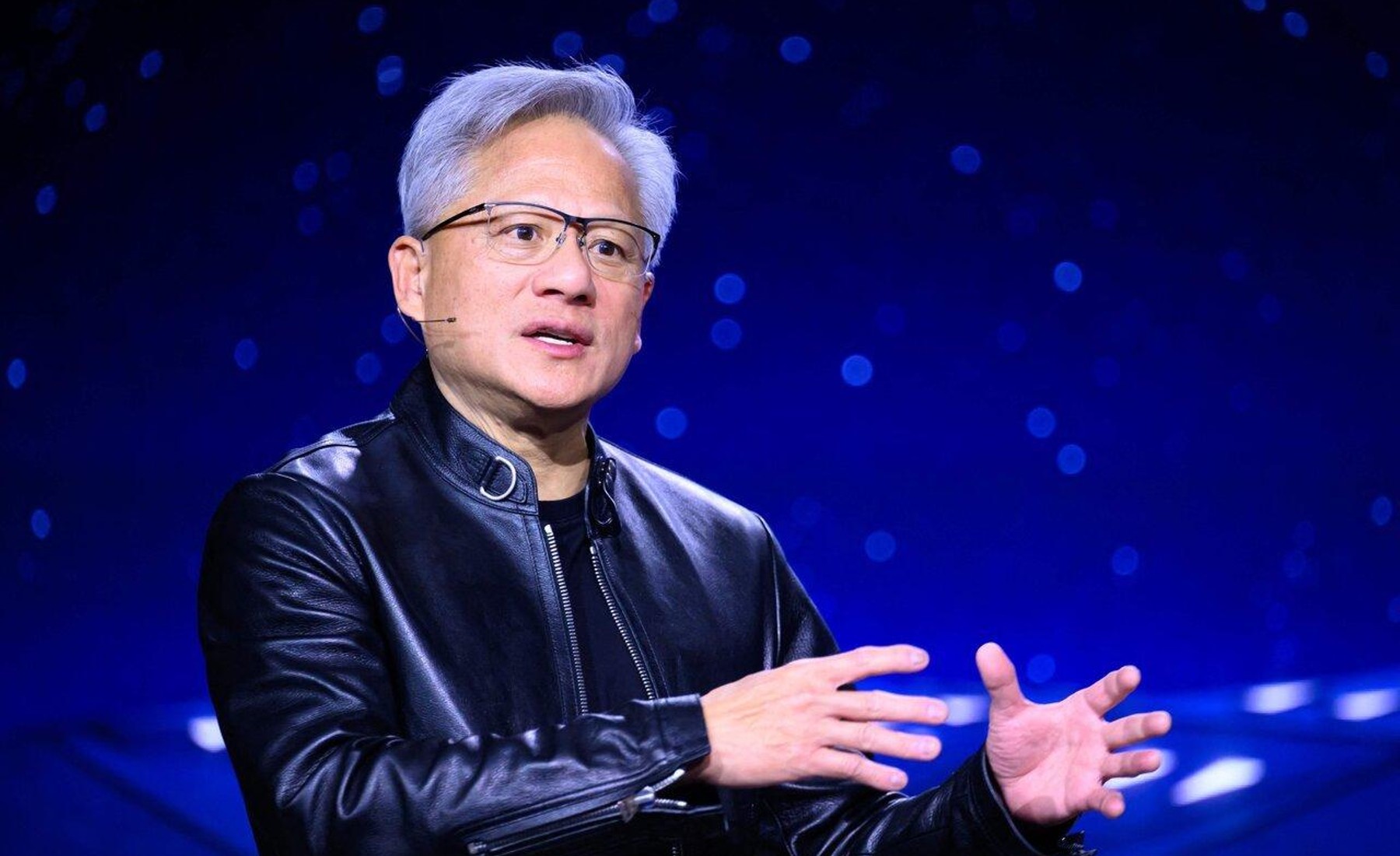
Nvidia co-founder Jensen Huang has resigned as chief executive of the American semiconductor company, bringing an abrupt end to more than three decades of leadership during which he helped transform the business into one of the most influential companies in artificial intelligence.
The company confirmed on Thursday, November 12, that Huang had stepped down as president, chief executive and a member of its board of directors, effective immediately.
Nvidia appointed its chief financial officer, Colette Kress, as interim chief executive while the board begins searching for a permanent successor. Kress will continue to oversee the company's financial operations during the transition.
The board also appointed Harvey C. Jones as its first chair, introducing a new leadership structure following Huang's departure.
Huang co-founded Nvidia in 1993 and oversaw its evolution from a graphics processing company serving the video game industry into a major supplier of the advanced computing infrastructure used to develop and operate artificial intelligence systems.
Under his leadership, Nvidia's graphics processing units became central to the expansion of generative AI, supporting technology companies, research institutions and cloud computing providers around the world.
His departure follows reports concerning personal relationships and allegations that a Chinese businesswoman with whom he was involved had attracted the attention of United States intelligence authorities.
Nvidia's board announced an independent investigation on November 8, saying it would examine reports that Huang had been the target of a foreign intelligence effort. At the time, the company said it had no reason to believe its confidential information or national security had been compromised.
The company's November 12 resignation announcement did not specify the reason for Huang's departure. Allegations surrounding the reported relationships and any suspected intelligence activity remain distinct from the confirmed leadership change.
In its announcement, Nvidia emphasised its confidence in Kress and the wider management team, saying it expected operations, customer commitments and product development to continue without interruption.
Kress joined Nvidia in 2013 after holding senior finance positions at technology companies including Microsoft and Cisco. She has played a significant role in overseeing the company's finances during its rapid expansion.
The transition comes at a sensitive moment for Nvidia and the wider technology sector. The company's processors remain central to the AI infrastructure investments being made by major technology businesses, while investors continue to assess the scale and sustainability of spending on artificial intelligence.
Nvidia shares came under pressure following the announcement, with investors weighing the uncertainty created by Huang's exit and the challenge of replacing a founder closely associated with the company's strategy and public identity.
The board said its search for a permanent chief executive would consider candidates from both inside and outside the company.
Nvidia is scheduled to report its third-quarter fiscal 2027 financial results on November 17, providing an early opportunity for investors to assess the company's financial position under its new interim leadership.
For an industry that has closely associated Nvidia's growth with Huang's leadership, the resignation marks a significant turning point. The company's next challenge will be maintaining its technological position while establishing a new management structure capable of guiding its future.